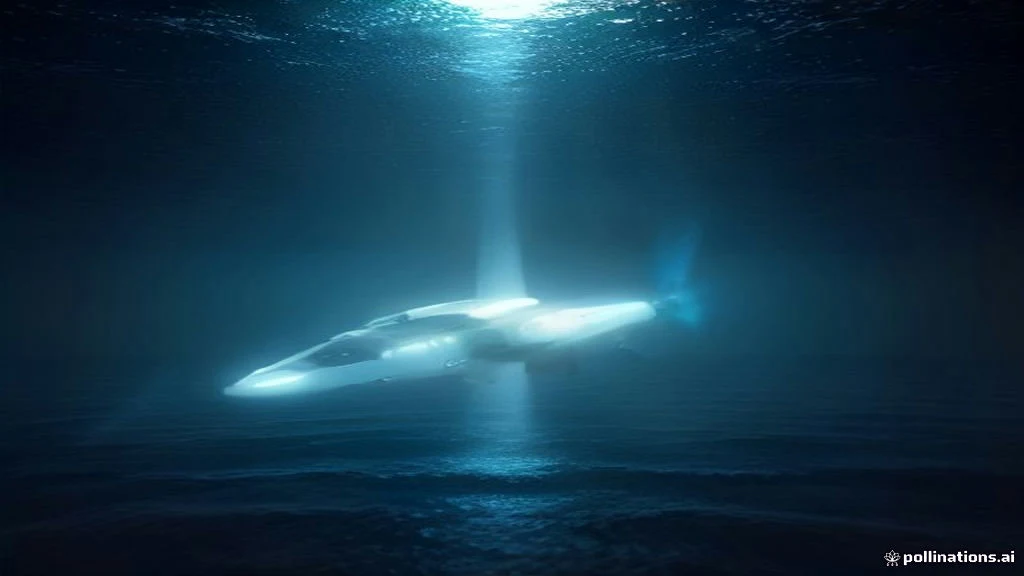
Beneath the turbulent, grey surface of the North Sea lies the invisible circulatory system of the United Kingdom. It is a dense, sprawling lattice of fiber-optic telecommunications cables, high-voltage electricity interconnectors, and the rapidly expanding array of offshore wind turbines. Since the 2022 Nord Stream sabotage, the vulnerability of this subsea infrastructure has shifted from a theoretical concern to a top-tier national security priority. As the UK accelerates toward its goal of 50GW of offshore wind capacity by 2030, the traditional model of maritime surveillance—relying on manned frigates and sporadic aerial patrols—has become mathematically and economically unsustainable.
The emerging paradigm is Swarm Intelligence (SI). By deploying decentralized networks of Autonomous Underwater Vehicles (AUVs) that mimic the collective behavior of biological swarms, the UK can achieve persistent, high-fidelity monitoring of its most critical assets. This guide investigates the mechanics, strategic necessity, and socio-economic implications of this technological shift.
The Strategic Imperative: Why the North Sea Demands Swarm Intelligence
The North Sea is a high-pressure, high-stakes environment. With over 97% of the UK’s global communications traffic traversing subsea cables, any disruption—whether accidental or state-sponsored—carries existential risks to the national economy. Rear Admiral (Ret.) Julian Stannard, a veteran maritime security analyst, notes that the region has become a "contested space." Gray-zone activities, such as unauthorized bathymetric mapping or the deployment of sensors near energy hubs, require a level of continuous monitoring that legacy platforms simply cannot provide.
Traditional systems suffer from the 'single-point failure' flaw. A manned vessel is expensive, limited by crew endurance, and vulnerable to environmental conditions. Conversely, an autonomous swarm offers a distributed, resilient architecture. If one AUV is lost to a current or a mechanical failure, the swarm reconfigures its search pattern, maintaining total area coverage. This is not merely an upgrade in hardware; it is a fundamental shift in the doctrine of maritime presence.
[AD_CENTER]
The Mechanics of Multi-Agent Coordination
At the heart of this revolution is the transition from centralized control to decentralized emergence. Swarm intelligence relies on local interaction rules. Each AUV acts as an independent agent, sensing its immediate environment and communicating with its nearest neighbors to maintain a cohesive formation without needing a 'master' controller.
Communication Protocols in GPS-Denied Environments
The greatest challenge for AUV swarms is the physics of the medium. Radio frequencies do not penetrate deep water, rendering GPS and standard Wi-Fi useless. Coordination must rely on Acoustic Communication Protocols. These protocols allow for low-bandwidth, long-range data exchange, enabling the swarm to share target coordinates, battery status, and sensor anomalies. Future development is currently focused on 'acoustic mesh networking,' where the swarm acts as a relay, passing information through a chain of units back to a surface gateway buoy or a subsea data center.
Behavioral Algorithms and Collective Sensing
To understand how these swarms operate, consider the following operational framework:
| Feature | Traditional Maritime Patrol | AUV Swarm Intelligence |
|---|---|---|
| Coverage | Intermittent/Reactive | Persistent/Proactive |
| Resilience | Low (Single point failure) | High (Redundant/Distributed) |
| Cost | Prohibitively High | Scalable/Cost-Effective |
| Intelligence | Human-in-the-loop | AI-driven/Adaptive |
Dr. Elena Vance, Lead Researcher at the Centre for Maritime Intelligent Systems, describes this as a shift toward "resilient, distributed networks." By utilizing algorithms such as 'Particle Swarm Optimization' (PSO) or 'Ant Colony Optimization' (ACO), the swarm can autonomously calculate the most efficient path to inspect a damaged cable or intercept an unidentified submersible, all while conserving battery life.
Economic and Social Impact Analysis
The socio-economic argument for AUV swarms is compelling. As the UK scales its offshore wind capacity, the cost of patrolling these sites using surface vessels could easily spiral into the billions. By shifting to a 'Swarm-as-a-Service' model, operators can utilize private sector fleets that are modular and scalable. This lowers insurance premiums for energy operators and provides a level of security that protects the UK’s transition to net-zero energy from external sabotage.
However, this transition is not without risk. The reliance on AI-driven decision-making raises significant questions regarding the 'human-in-the-loop' requirement. If an autonomous swarm identifies a threat, at what point does it escalate? The risk of accidental escalation in international waters is a critical regulatory hurdle that the Ministry of Defence must address before wide-scale deployment.
[AD_CENTER]
Future Outlook: Digital Twins and Beyond
Looking toward the next five years, the integration of Digital Twin technology with AUV swarms will transform the maintenance of subsea cables. By creating a real-time virtual replica of the infrastructure, the swarm will not only guard against intruders but also perform predictive maintenance. AUVs equipped with high-resolution sonar and chemical sensors will detect early signs of corrosion or structural fatigue long before a failure occurs.
The Role of the Ministry of Defence
The UK Ministry of Defence (MoD) is expected to formalize procurement frameworks that encourage private-public partnerships. In this future landscape, the private sector provides the hardware and the AI orchestration, while the Royal Navy focuses on high-level operational intelligence and rapid response. This hybrid model balances the innovation speed of the tech sector with the strategic oversight of the state.
Case Study: Implementing a Persistent Surveillance Grid
Consider a hypothetical deployment around an offshore wind farm cluster in the North Sea. The deployment follows a three-tier strategy:
- The Perimeter Swarm: A wide-area, low-power swarm patrolling the outer boundary, using passive acoustic sensors to detect cavitation or engine noise from unauthorized surface or subsea vessels.
- The Asset-Specific Swarm: A high-precision swarm tasked with constant monitoring of interconnector junctions, utilizing magnetic anomaly detection (MAD) to identify foreign metallic objects.
- The Data Relay Layer: A series of autonomous underwater gliders that act as communication bridges, surfacing periodically to transmit compressed security data via satellite to the mainland.
This layered approach ensures that even if a segment of the swarm is neutralized, the overall integrity of the security grid remains intact. It is a system built for the high-pressure, high-risk reality of modern maritime warfare.
[AD_CENTER]
Conclusion: The Path Forward
Swarm Intelligence represents the most viable path toward securing the UK’s critical subsea infrastructure. As the threats in the North Sea evolve, so too must our defensive capabilities. The move toward autonomous, multi-agent coordination is no longer a futuristic concept; it is an urgent requirement of the digital age. By investing in robust acoustic communication, advanced AI behavioral algorithms, and clear regulatory frameworks, the UK can lead the world in underwater security, ensuring that our energy and communication lifelines remain protected against the uncertainties of the future.