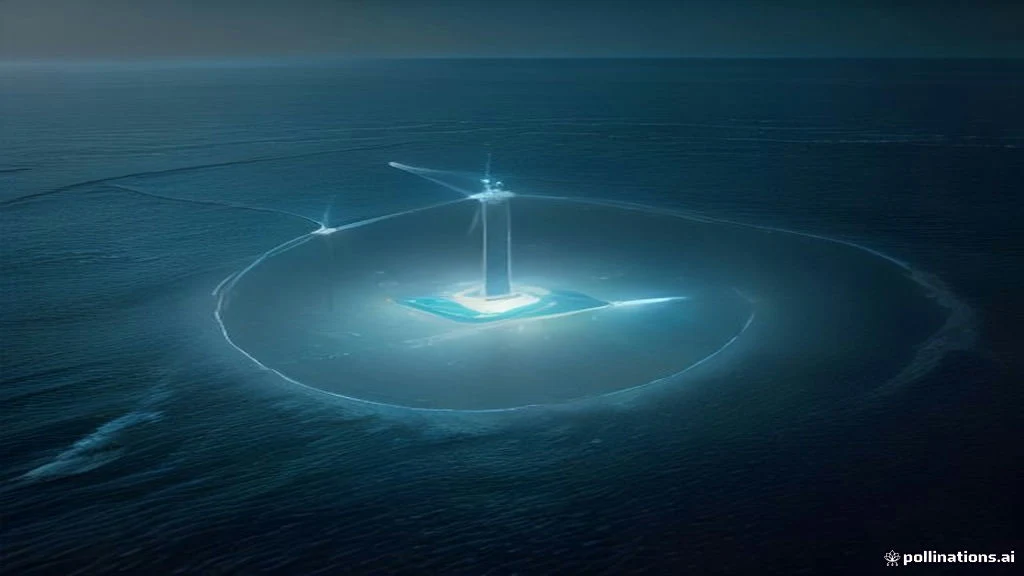
The UK energy landscape is undergoing a fundamental shift. As we race toward a 50GW offshore wind capacity by 2030, the reliance on legacy maintenance models—defined by reactive, manual, and time-intensive inspections—is rapidly becoming an economic and operational liability. For the North Sea, where the environment is as unforgiving as the market pressures are high, the adoption of Digital Twin-Driven Lifecycle Management is no longer a luxury; it is the cornerstone of structural integrity and financial viability.
The Economic Imperative for Digital Twins
At the heart of the transition is the Levelized Cost of Energy (LCOE). To remain competitive, operators must move beyond traditional O&M (Operations and Maintenance) cycles. The current industry standard, heavily influenced by oil and gas heritage, relies on scheduled vessel deployments and divers, which are not only high-risk but also contribute significantly to the total cost of asset ownership.
By deploying digital twins—dynamic, high-fidelity virtual replicas of physical subsea assets—operators can simulate environmental stressors in real-time. These systems integrate sensor data from turbine foundations, inter-array cables, and emerging hydrogen storage infrastructure. The result is a shift from periodic maintenance to condition-based monitoring, which can reduce subsea inspection and repair costs by up to 40%.
[AD_CENTER]
AI-Predictive Maintenance: The Digital Nervous System
Dr. Aris Vrettos, Lead Engineer at ORE Catapult, aptly describes digital twins as the "digital nervous system" of subsea assets. The integration of Artificial Intelligence transforms these replicas from static 3D models into predictive engines. By feeding historical sensor data and real-time telemetry into machine learning algorithms, operators can identify micro-fractures in concrete foundations or detect electrochemical corrosion on hydrogen pipelines long before they reach a critical failure state.
Analyzing the Predictive Workflow
| Process Stage | Traditional Method | AI-Driven Digital Twin | Impact |
|---|---|---|---|
| Inspection Frequency | Time-based (Annual) | Condition-based (Real-time) | 30% reduction in vessel use |
| Failure Detection | Reactive (Post-event) | Predictive (Proactive) | 40% lower repair costs |
| Data Processing | Manual Reporting | Automated Diagnostics | Faster decision-making |
This shift allows for the scheduling of repairs during favorable weather windows, maximizing the availability of energy assets and ensuring that the UK grid remains resilient during peak demand. The economic ROI is clear: higher uptime equals higher revenue and a more stable energy transition.
Hydrogen Storage: The New Frontier in Subsea Complexity
As the UK explores the use of depleted gas fields for large-scale hydrogen storage, the technical requirements for lifecycle management evolve. Hydrogen presents unique challenges, including the risk of embrittlement in metallic infrastructure and the need for precision monitoring of pressure seals.
Sarah Tennison, Technology Director at Global Underwater Hub, emphasizes that the convergence of hydrogen storage and offshore wind creates a unique subsea ecosystem. Managing this requires a holistic digital twin architecture that accounts for geochemical sensor data. AI models must now account for the chemical interaction between stored hydrogen and the surrounding subsea geology, ensuring containment integrity over decades of operation.
[AD_CENTER]
Bridging the Digital Divide: Workforce Evolution
The technological leap is as much about human capital as it is about software. The UK's transition to a net-zero economy necessitates a rapid upskilling of the subsea workforce. Traditional subsea technicians, who once relied on manual dexterity and physical presence, are now becoming data-literate operators.
This "digital divide" poses a significant risk to the sector's growth. Investment in training programs that bridge the gap between offshore engineering and data analytics is essential. By fostering a workforce capable of interpreting AI-augmented dashboards, the UK secures its position as a global exporter of high-value subsea engineering services, effectively repurposing the legacy expertise of the North Sea oil and gas industry for the renewable era.
Case Study: Integration of Resident AUVs
Innovation is accelerating toward 'Autonomous Subsea Clusters.' Recent pilot programs in the North Sea have tested the integration of resident Autonomous Underwater Vehicles (AUVs) with digital twins. In these scenarios, the digital twin acts as the 'brain,' identifying a potential maintenance need and dispatching a resident AUV from a subsea garage to perform an inspection or minor repair.
This cycle, known as Self-Healing Infrastructure, minimizes the carbon footprint of maintenance vessels and eliminates the risk to human divers. As we look toward 2030, the synergy between AI and robotics will be the primary driver of efficiency in the UK offshore sector. The ability to perform autonomous, predictive, and targeted maintenance will define the winners in the race for renewable energy dominance.
Future Outlook: Challenges and Regulatory Compliance
Despite the clear benefits, the implementation of digital twins is not without hurdles. Data silos remain a significant barrier. For a digital twin to be truly effective, it requires interoperability between turbine manufacturers, sensor providers, and grid operators.
Regulatory bodies in the UK are currently working to establish standards for digital twin data security and accuracy. As critical national infrastructure, these digital replicas must be fortified against cyber threats, as they contain sensitive data regarding the structural health of the UK's energy backbone.
[AD_CENTER]
Conclusion: A Strategic Path Forward
The transition to digital twin-driven lifecycle management is the most significant leap in offshore engineering since the move to deep-water drilling. By embracing AI-predictive maintenance, the UK is not only reducing the LCOE of its offshore wind and hydrogen projects but is also building a resilient, data-driven energy future.
For investors and stakeholders, the message is clear: the value lies in the data. Assets that are 'born digital' and maintained through continuous AI oversight will command higher valuations and lower operational risks. As the North Sea continues to evolve, the digital twin will remain the most critical piece of equipment in the subsea toolkit.