The Shift Toward Autonomous Offshore Maintenance
The United Kingdom holds the world’s most ambitious offshore wind capacity targets. However, the harsh, unpredictable environment of the North Sea creates a persistent bottleneck: the Operational and Maintenance (O&M) cycle. Traditional reliance on vessel-based, manual rope-access inspections is not only costly but inherently dangerous and weather-limited.
As the UK pushes toward its Net Zero 2050 mandate, the industry is pivoting toward a radical integration of Spatial Computing and Digital Twin technology. By pairing autonomous drone swarms with real-time LiDAR point-cloud generation, operators are moving from reactive, time-based maintenance to a predictive, data-driven model. This framework outlines the architecture of this transition and how it is redefining the UK’s energy security.
The Framework: Converging LiDAR, AR, and Digital Twins
To understand the magnitude of this shift, we must look at the technical stack. The modern offshore wind asset is no longer just a mechanical structure; it is a node in an industrial metaverse.
Data Acquisition via LiDAR-Equipped Drones
Autonomous drones equipped with high-density LiDAR sensors act as the 'eyes' of the turbine. Unlike standard high-resolution photography, LiDAR captures precise spatial geometry. These drones navigate complex turbine blade geometries, creating a 'point cloud' that maps structural fatigue, surface erosion, and lightning strike damage with millimeter accuracy.
The Living Digital Twin
This raw data is fed into a Digital Twin, a high-fidelity, virtual replica of the physical asset. Unlike static BIM models, a living digital twin updates in real-time. It integrates historical performance data, current environmental stress factors (wind speed, salinity, tidal pressure), and real-time inspection feeds.
Spatial Computing and AR Overlays
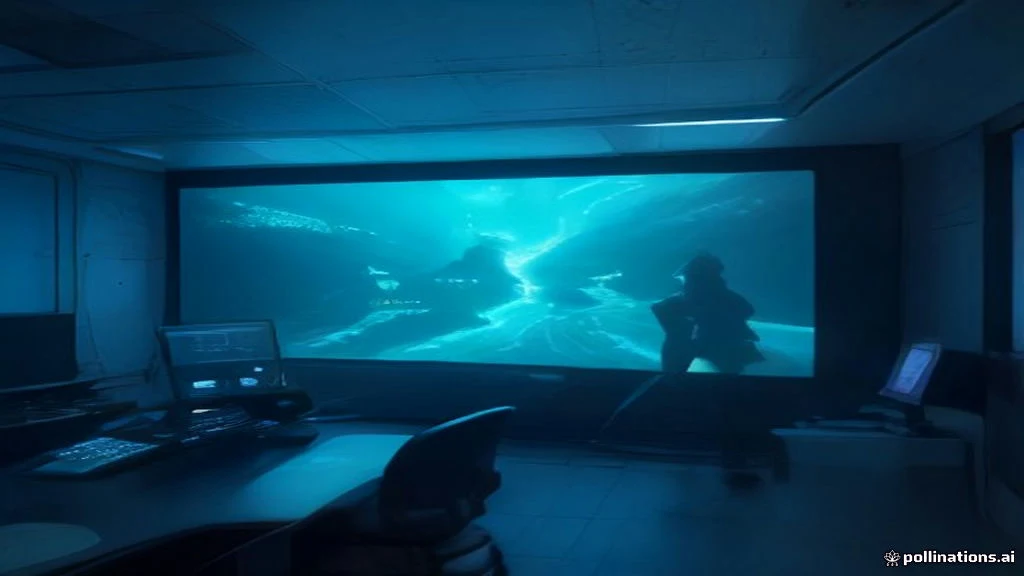
Spatial computing bridges the gap between the virtual model and the physical world. Through Augmented Reality (AR), a technician situated in a central control hub—perhaps hundreds of miles away in Hull or Grimsby—can visualize the turbine’s internal structure, highlight stress concentrations, and guide autonomous repair drones in real-time. This is not merely remote monitoring; it is remote presence.
[AD_CENTER]
Economic and Operational Impact Analysis
The shift toward autonomous inspection pipelines is backed by compelling economic data. According to the Offshore Renewable Energy (ORE) Catapult, the UK offshore wind O&M market is projected to reach £2.5 billion annually by 2030. Digital transformation is expected to reduce operational costs by up to 30%.
| Metric | Manual Method (Legacy) | Autonomous Pipeline (Future) | Improvement |
|---|---|---|---|
| Inspection Time | 2-4 Days | 4-6 Hours | ~80% reduction |
| Safety Risk | High (Human exposure) | Zero (Human remote) | 100% reduction |
| Downtime | 100% during inspection | 15-20% reduction | Significant |
| Data Precision | Subjective (Human eye) | Objective (LiDAR Cloud) | Superior |
By minimizing human presence on turbines, companies significantly lower insurance premiums and mitigate the high costs associated with vessel deployment in hazardous sea states.
Expert Perspectives on the 'Headless' Maintenance Model
Dr. Elena Vance, Lead Researcher at ORE Catapult, emphasizes that this is about closing the loop. "The integration of spatial computing isn't just about visualization; it's about closing the loop between data acquisition and automated repair. LiDAR-enabled drones feeding real-time data into a digital twin allows for a 'single source of truth' that eliminates human error in structural integrity assessments."
This sentiment is echoed by Marcus Thorne, Head of Energy Infrastructure at Innovate UK: "We are moving toward a 'headless' maintenance model. By leveraging AR, a technician in a control room can effectively 'be' on a turbine 100 miles offshore, guiding an autonomous drone to perform precision repairs, which is a game-changer for UK energy security."
[AD_CENTER]
Strategic Implementation: A Roadmap for Operators
For UK operators, the integration of these technologies requires a phased approach. It is not sufficient to simply purchase hardware; the value lies in the data pipeline integration.
- Infrastructure Digitization: Establish a baseline digital twin for all existing Round 3 assets. This involves comprehensive laser scanning to create the 'golden record' of the turbine's current state.
- Connectivity Investment: As 5G and 6G private networks expand across the North Sea, low-latency data transmission becomes the backbone of real-time AR control.
- Autonomous Resident Drones: Transition from 'campaign-based' drone flights to 'resident' drone fleets housed in offshore charging garages on the turbine nacelle. This ensures the drone is always available, regardless of vessel availability.
- AI-Driven Analytics: Utilize machine learning to analyze LiDAR point clouds for early detection of structural fatigue, allowing for proactive repairs before critical failure occurs.
Future Outlook: Autonomous Inspection-as-a-Service (AIaaS)
The next 3 to 5 years will see the emergence of Autonomous Inspection-as-a-Service (AIaaS). In this model, wind farm operators will procure maintenance as a continuous stream of data and intervention, rather than a series of one-off contracts.
This shift is also creating a high-skill 'Digital Energy' workforce in the UK. We are seeing a transition from traditional manual labor to systems management, robotics engineering, and data analytics. By positioning itself as a global exporter of this O&M software, the UK is effectively turning its domestic offshore wind sector into a laboratory for the global energy transition.
[AD_CENTER]
Conclusion: The Path to Net Zero
The integration of spatial computing and digital twins represents the final frontier in offshore wind efficiency. By removing the human element from the hazardous North Sea environment, we do more than just lower costs—we guarantee the reliability of our energy grid. As the UK continues to lead the global offshore wind market, the adoption of these autonomous pipelines will become the standard requirement for all future leasing rounds, marking the end of the manual maintenance era.