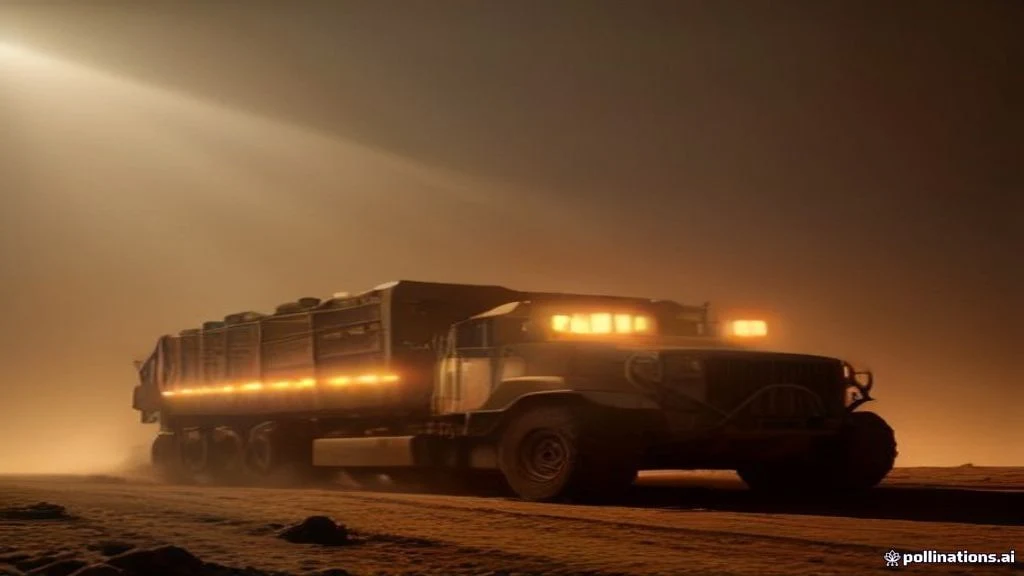
The Imperative of Multi-Modal Fusion in Australia’s Harsh Mining Environments
The Australian mining landscape, particularly within the iron ore-rich Pilbara and the coal-heavy Bowen Basin, presents an environment that is as unforgiving as it is lucrative. For Tier-1 operators like Rio Tinto, BHP, and Fortescue, the transition toward full autonomy is no longer a futuristic ambition—it is a baseline requirement for maintaining global competitiveness. However, the reliance on traditional LiDAR-only systems has reached a technological bottleneck. In the presence of extreme dust, localized heat haze, and volatile weather patterns, LiDAR pulses scatter, leading to phantom obstacles and the dreaded 'stop event.'
To overcome these environmental limitations, the industry is pivoting toward Multi-Modal Sensor Fusion. This architectural shift involves the synchronized integration of LiDAR, long-range radar, thermal imaging, and high-definition optical cameras. By synthesizing data from these disparate sources, autonomous haulage systems (AHS) can construct a high-fidelity 'Digital Twin' of their immediate surroundings, ensuring operational continuity even when visual perception is compromised.
[AD_CENTER]
The Technical Architecture of Sensor Fusion: Beyond LiDAR
The primary challenge in mining autonomy is the management of noise-to-signal ratios. A high-definition camera may struggle with blinding sunlight or total darkness, while radar provides excellent velocity data but lacks the spatial resolution for fine-grained object classification. The solution lies in deep-learning-based fusion, where the system assigns 'confidence weights' to each sensor input in real-time.
Sensor Modality Breakdown
| Sensor Type | Operational Strength | Weakness in Mining | Role in Fusion |
|---|---|---|---|
| LiDAR | Precise 3D mapping | Dust/Atmospheric interference | Spatial anchor |
| Radar | All-weather, velocity tracking | Low resolution | Motion/Safety trigger |
| Thermal | Heat signature detection | Requires calibration | Personnel/Machine detection |
| HD Camera | Semantic segmentation | Affected by light/dust | Object classification |
As Dr. Elena Vance of the Australian Centre for Field Robotics (ACFR) notes, the shift toward deep-learning-based fusion is the 'holy grail.' It allows the vehicle to perceive not just the presence of an object, but the context—differentiating between a rock pile, a light vehicle, or a human operator in the pit.
Economic Impact and Productivity Gains
The economic case for multi-modal sensor fusion is empirically supported by the 15-20% increase in productivity observed in AHS-enabled sites compared to manual operations (CSIRO Data61, 2026). When a system misidentifies a dust cloud as a physical obstacle, the vehicle initiates an emergency stop. These 'false positives' are a silent killer of productivity. By integrating radar and thermal inputs, the system can 'see through' the dust, reducing these stop events by 35%.
This reduction in downtime translates directly into a lower cost-per-tonne, a critical metric in the volatile iron ore market. Furthermore, as investment in AI-driven fusion technologies is projected to reach $1.2B AUD by 2028, the focus is shifting from simple obstacle avoidance to predictive operational efficiency.
[AD_CENTER]
Addressing the Edge Computing Challenge at the Pit Face
Marcus Thorne, CTO at a leading Tier-1 operator, emphasizes that the bottleneck is no longer sensor data collection, but data throughput. Multi-modal fusion generates massive, high-velocity datasets that cannot be transmitted to a remote operations center (ROC) in Perth or Brisbane without significant latency. Consequently, the industry is deploying robust Edge-Computing infrastructure directly onto the vehicle chassis.
By processing sensor data at the 'pit face,' autonomous vehicles can make split-second decisions (e.g., emergency braking or path correction) locally. Only the processed metadata and health diagnostics are sent via private 5G/LTE networks to the ROCs. This architecture ensures that even in the event of a network drop-out, the vehicle maintains full safety functionality—a non-negotiable requirement for mining compliance in Australia.
The Future: Interoperability and Digital Twins
The next 24 months will be defined by the push for standardization. Currently, Tier-1 miners often operate mixed fleets from different OEMs, such as Caterpillar and Komatsu. Historically, these systems were siloed. The upcoming industry-wide focus is on creating a unified 'autonomous ecosystem' where sensor protocols are interoperable, allowing different vehicle types to 'communicate' their environmental perception data to one another.
The Role of Digital Twins
Predictive maintenance is becoming inextricably linked with sensor fusion. As vehicles traverse the haul road, they are not only navigating; they are scanning the road condition. This data feeds into a real-time Digital Twin of the mine site, allowing geotechnical teams to anticipate road failures, washouts, or mechanical stressors before they lead to catastrophic equipment failure. This is the transition from 'reactive autonomy' to 'proactive site management.'
[AD_CENTER]
Socio-Economic Implications: The Workforce Transformation
While the technical benefits are clear, the socio-economic impact of this shift is multifaceted. The remote nature of Australian mining has historically provided significant employment opportunities for regional and indigenous communities. As operations move toward centralized ROCs in major urban hubs, the nature of work is changing.
There is a critical need for a massive upskilling initiative. The role of the 'truck driver' is being replaced by the 'remote autonomous system controller' and 'robotic fleet maintainer.' The industry, government, and educational institutions must collaborate to ensure this digital transformation does not exacerbate the digital divide. By investing in regional training hubs, Tier-1 miners can ensure that the economic benefits of automation are shared with the communities that have historically powered Australia’s resource sector.
Conclusion: Securing Australia’s Competitive Edge
The shift toward multi-modal sensor fusion is the defining technological evolution of the decade for Australian mining. By eliminating the blind spots inherent in single-sensor systems, operators are securing safety, driving unprecedented productivity, and future-proofing their sites against the complexities of the climate. As we move toward the milestone of Level 5 autonomy, the focus remains on the synthesis of human-like contextual awareness and machine-speed data processing. For Australia, this is not just about mining—it is about maintaining global leadership in industrial technology and resource extraction in the most challenging conditions on Earth.